Dispersed Camping Leave No Trace: Rules That Actually Matter
Dispersed camping leave no trace — the five practices that prevent site damage and closures, not another recitation of the 7 principles.
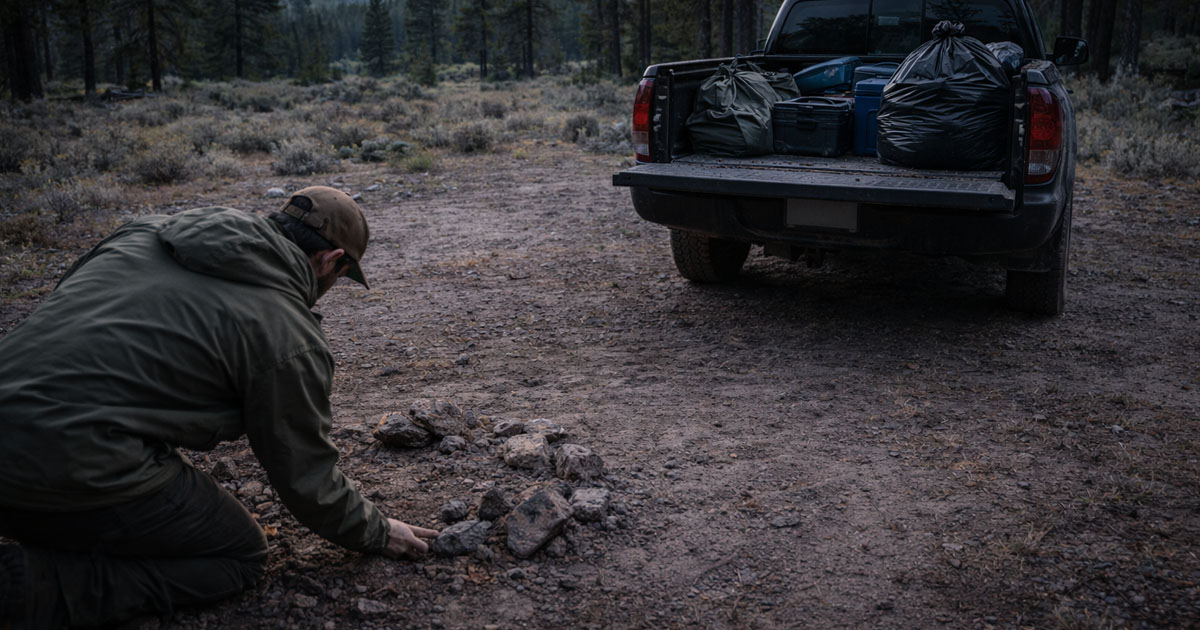
Dispersed camping leave no trace isn’t abstract ethics — it’s the reason these places stay open. Areas near Sedona have been closed to dispersed camping. BLM corridors outside Moab have added restrictions and designated-site requirements. Forest roads near Crested Butte have been gated. The cause is always the same: cumulative damage from too many people each leaving a small mark. A new fire ring here, toilet paper there, a grey water puddle, food scraps on the ground. No single camper ruined these places. Hundreds of campers each leaving one small trace did.
You already know the 7 Leave No Trace principles. You can probably list them. But knowing the principles and knowing what they actually look like at a dispersed site — no dumpsters, no vault toilets, no camp host — are different things. This guide is the dispersed-specific translation: the five leave no trace camping practices that account for most of the damage when done wrong and most of the preservation when done right. If you’re new to dispersed camping entirely, start with our complete dispersed camping guide first. This article assumes you know the basics and want to do them well — how to camp responsibly at sites where nobody’s watching.
Why This Matters More Than You Think
Land managers don’t close dispersed camping areas because one person left trash. They close them when the cumulative evidence of poor practices becomes undeniable — and when the cost of managing the damage exceeds the budget they have for that area.
The Coconino National Forest near Sedona has closed multiple dispersed camping corridors in recent years after accumulated damage from fire rings, human waste, trash, and vehicle impact. BLM land around Moab has shifted from open dispersed camping to designated-site models in popular corridors — fees now apply where camping used to be free. Forest roads near Crested Butte have been gated after vehicle damage to meadows and wetlands during mud season.
This isn’t guilt-tripping. It’s cause and effect. The dispersed camping rules and LNT practices in this guide exist because they’re the specific behaviors that determine whether an area stays open or gets restricted. That’s the stakes.
The Five Leave No Trace Practices That Matter Most at Dispersed Sites
The official 7 principles all matter. But at dispersed car camping sites, five specific practices account for the overwhelming majority of visible damage. These are ranked by impact — if you do nothing else, do these five.
1. Use Existing Sites and Fire Rings — Stop Making New Ones
This is the highest-impact leave no trace camping practice at dispersed sites, and the one most commonly violated. Every new fire ring and every new clearing is permanent damage that compounds over time.
Camp on previously disturbed ground — existing clearings, established pull-offs, spots where you can see previous use (a fire ring, cleared ground, tire tracks from past vehicles). These are the dispersed “sites” even though nobody designated them. Using them concentrates campsite impact on ground that’s already been disturbed rather than spreading damage to new areas.
Never create a new fire ring. Use the one that’s there. If a site has multiple fire rings — and many popular dispersed sites do, because previous campers each built their own — use the best-established ring and consider dismantling the extras. Scatter the rocks into natural positions, spread the ash over a wide area, and let the ground start recovering. One ring per site. That’s the standard.
Don’t clear brush, drag logs to make camp furniture, or cut branches for a better view. One person trimming one branch is nothing. Fifty people each trimming one branch over a season strips the site bare. The campsite impact of dispersed camping is cumulative, not individual — which is exactly why it’s so easy to rationalize and so hard to reverse.
Park on rock, gravel, or hard-packed dirt. Never on vegetation, wet meadows, or cryptobiotic soil crust — the dark, lumpy biological soil common in Utah and the desert Southwest that takes decades to regrow after one tire track.
2. Human Waste — The Problem Nobody Wants to Talk About
Human waste dispersed camping management is the most consequential LNT practice and the one people are most uncomfortable discussing. The white “flowers” at popular dispersed sites are toilet paper. The smell near some established sites is human waste that wasn’t buried deep enough or was left on the surface. This is the fastest way to get an area closed.
Cat holes are the baseline method. Dig 6–8 inches deep, at least 200 feet from water, trails, and camp. Use a trowel — the rocks-and-sticks method rarely gets deep enough. Fill the hole completely and disguise the surface when you’re done. Cat holes work in most soil types but become inadequate in several situations: desert soil that’s too rocky to dig, heavily trafficked areas where the ground is saturated with shallow cat holes, and multi-day stays where a single camper creates multiple holes in one area.
WAG bags (Waste Alleviation and Gelling bags) solve the problem completely. They’re required in some wilderness areas and some popular dispersed corridors — but they work everywhere. Use the bag, seal it, pack it out, dispose at a trash facility. They cost $2–$3 each and weigh almost nothing. For multi-day dispersed stays, they’re the responsible choice even where they’re not required.
Toilet paper: pack it out. Always. In a sealed ziplock bag. No exceptions. “Burying” toilet paper doesn’t work — animals dig it up, erosion exposes it, wind uncovers it. Decomposition in arid western environments takes months to years. The toilet paper litter at popular dispersed sites is entirely preventable, and it’s the visual that disgusts other campers and motivates land managers to act.
If you’re camping with a dog, their waste follows the same pack it in pack it out standard. See our guide on dispersed camping with dogs for the full waste management breakdown.
3. Grey Water — The Mess That Nobody Covers
Grey water camping management is the LNT gap between backpacking (you use so little water it barely matters) and developed campgrounds (drains exist). At a dispersed car camping site, you’re cooking real meals, washing real dishes, and generating a gallon or more of grey water per day. There’s no drain. You’re the drain.
Grey water is dish water, hand wash water, cooking liquid, and coffee rinse. Not human waste — that’s black water and follows the rules above.
The scatter method:
- Strain grey water through a fine mesh strainer or bandana. Food particles go in your trash bag — they attract animals and create smell.
- Walk 200 feet from any water source, trail, or camp.
- Scatter the strained water in a wide arc over soil. Broadcast it — don’t dump it in one spot. A concentrated dump creates a grease patch and smell that lasts for weeks.
Use biodegradable soap (Dr. Bronner’s, Campsuds) in tiny amounts — a few drops, not a squirt. Biodegradable doesn’t mean “safe to dump in a creek.” It means the soap breaks down faster in soil. It still needs to be scattered on land, 200 feet from water. For the full water system including grey water, see our dispersed camping water guide.
4. Fire Management — Beyond “Check Restrictions”
Fire is the most visually impactful LNT issue at dispersed sites and the most heavily regulated. The campfire leave no trace standard is higher than most people practice.
Use existing fire rings only. This reinforces Practice #1 — never build a new ring. If you don’t find an existing fire ring at your site, don’t build one. Use a camp stove for cooking and skip the campfire. One less ring is better than one more ring.
Keep fires small. A cooking-sized fire that fits inside the ring is enough. Bonfires burn incompletely, waste wood, scatter embers further, and leave more debris. A small fire burns hotter, burns more completely, and is easier to extinguish.
Burn wood completely to ash. Half-burned logs left in fire rings are the mark of a lazy camper. If you start a fire, finish it. Break partially burned logs into the coals and let them burn down. If it’s time to leave and wood is still burning, douse it — don’t leave half-burned logs for the next person.
Dead and down wood only. Never cut standing trees — even dead ones. Standing dead trees (snags) are critical wildlife habitat. Cavity-nesting birds, insects, and small mammals depend on them. Harvest wood from the ground. If the ground near your site is picked clean, expand your search radius rather than cutting standing wood.
Cold ashes before you leave: Stir the ashes, douse with water, stir again, feel with the back of your hand. If it’s warm, you’re not done. Douse again. We’ve found warm fire rings at midday where campers “left that morning” — warm ashes with wind and dry grass nearby is how wildfires start at dispersed sites.
Check restrictions every trip. Fire restrictions change seasonally and can go into effect mid-trip. Stage 1 typically bans campfires but allows camp stoves. Stage 2 may ban all ignition sources. Check the specific forest or BLM district before you go, and check again if you’re on a long trip. Don’t assume last month’s rules apply this month.
5. Pack It In, Pack It Out — Including the Stuff You Didn’t Bring
The pack it in pack it out standard at dispersed sites extends beyond your own trash. There are no dumpsters. There are no trash pickups. What you leave behind stays until the next camper finds it — or until a volunteer crew hauls it out months later.
Everything you bring in leaves with you. Food scraps, banana peels, eggshells, orange rinds, apple cores — nothing is “biodegradable enough” to leave on the ground. Decomposition in arid western environments takes months to years. In the meantime, food waste attracts rodents, ravens, coyotes, and bears to the site, training them to associate campsites with food sources. That association makes them bolder and creates a safety problem for every camper who follows you.
Designate a heavy-duty trash bag from day one. Everything goes in it — food packaging, food scraps, used paper towels from the pre-wipe method, sealed toilet paper bags, micro-trash you find at the site.
Walk the entire site before you pull out. Look for micro-trash: bottle caps, twist ties, foil pieces, gum wrappers, cigarette butts, shotgun shells. Pick up anything you find, even if it’s not yours — especially if it’s not yours. If every dispersed camper picked up five pieces of trash they didn’t bring in, these sites would get cleaner every season. That’s the dispersed camping etiquette standard: leave it better, not just leave no trace.
The Two Principles That Apply Differently at Dispersed Sites
Two of the 7 Leave No Trace principles — “Respect Wildlife” and “Be Considerate of Other Visitors” — apply the same way at dispersed sites as anywhere else, but with nuances worth noting.
Wildlife and food storage matters more at dispersed sites because there are no bear boxes, no food lockers, and no camp host to remind you. Hard-sided coolers locked in your vehicle overnight, no food left on tables or the ground, and no food scraps anywhere on the site. In bear country, this is both LNT and personal safety — a bear that gets food at a dispersed site will return, and it won’t be your problem, it’ll be the next camper’s problem.
Other visitors and shared solitude is the social contract of dispersed camping. Give space — 300+ feet from other camps if terrain allows. Keep generator noise to daytime hours. Sound carries without buildings and trees to absorb it, and people drove 40 miles down a dirt road for quiet. Music, conversations, barking dogs — all of it travels further than you think. The leave no trace principles extend beyond physical traces to experiential ones.
What Happens When LNT Fails — Area Closures
When Leave No Trace fails at scale, dispersed camping areas close. This isn’t speculation — it’s a documented pattern across the western United States.
The Coconino National Forest closed multiple popular dispersed camping corridors after years of accumulated fire rings, waste, trash, and off-road vehicle damage. What was free and open became restricted. Some areas reopened with designated-site requirements and fee structures. Others remain closed for ecological restoration.
BLM land near Moab has shifted from open dispersed camping to managed recreation in popular corridors. Camping that was free now costs money. Sites that were choose-your-own are now designated and numbered. The restrictions followed years of visible damage — multiple fire rings per site, toilet paper and waste at the edges, trash left behind, and vehicle tracks through biological soil crust that took decades to form.
Similar patterns have played out near dispersed camping areas in Utah, across Colorado’s Front Range forests, and in the Pacific Northwest.
You can’t control what other people do. But every clean site left behind, every properly buried cat hole, every bag of micro-trash picked up and packed out — those are data points in the right direction. Land managers track trends. They notice when areas improve. One person won’t reverse a closure. But the cumulative impact of responsible campers is exactly the same mechanism as the cumulative impact of careless ones — just pointed in the opposite direction.
The Bottom Line
Dispersed camping leave no trace comes down to five practices: use existing sites and fire rings, handle your waste properly, manage grey water, respect fire, and pack everything out plus what you find. The 7 principles are the framework. These five are the dispersed-specific application. Do them consistently and these places stay open for everyone. Skip them and they close — not because of you alone, but because of the cumulative trend you’re part of.
The next time you break camp at a dispersed site, walk the entire perimeter before you pull out. Pick up five pieces of micro-trash that aren’t yours. Scatter your ashes cold. Leave one clean site behind. That’s the practice. That’s what actually matters.
Frequently Asked Questions
What are the Leave No Trace rules for dispersed camping?
The same 7 Leave No Trace principles apply, but five practices matter most at dispersed sites: use existing campsites and fire rings (never create new ones), handle human waste properly (cat holes or WAG bags, pack out toilet paper), scatter strained grey water 200 feet from water sources, manage fire responsibly (existing rings only, burn to ash, cold before leaving), and pack out all trash including micro-trash you find at the site.
How do you go to the bathroom when dispersed camping?
Dig a cat hole 6–8 inches deep, at least 200 feet from water, trails, and camp. Pack out toilet paper in a sealed bag — never bury it. For multi-day stays or desert environments where soil is rocky, use WAG bags and pack them out for disposal at a trash facility. Some areas legally require WAG bags.
Can you have a campfire when dispersed camping?
When fire restrictions allow it, yes — use existing fire rings only, never build new ones. Keep fires small, burn wood completely to ash, and make sure ashes are cold before leaving (stir, douse, stir, feel with your hand). Check fire restrictions before every trip — they change seasonally and can go into effect mid-trip.
What do you do with trash when dispersed camping?
Pack it all out. There are no dumpsters at dispersed sites. Designate a heavy-duty trash bag from day one. This includes food scraps, banana peels, eggshells — nothing decomposes fast enough to leave behind. Walk the entire site before leaving and pick up any micro-trash (bottle caps, foil, twist ties) even if it’s not yours.
Is it OK to camp on BLM land?
Yes. Dispersed camping is legal on most BLM land with a 14-day stay limit within any 28-day period. Camp on previously disturbed ground, stay at least 25 feet from water sources (some areas require more), and follow all Leave No Trace practices. Some BLM areas near popular recreation zones have specific restrictions — check with the local BLM field office.
How do you dispose of grey water when camping?
Strain grey water through a fine mesh or bandana to catch food particles — pack those out with your trash. Walk at least 200 feet from any water source, trail, or camp. Scatter the strained water in a wide arc over soil so it absorbs rather than pooling. Use biodegradable soap in small amounts. Never dump grey water near creeks or in one concentrated spot.