The Complete Guide to Dispersed Camping (From Someone Who's Done It Wrong)
Dispersed camping guide with real rules, tested gear advice, and a step-by-step process for finding free sites on public land. No fluff.
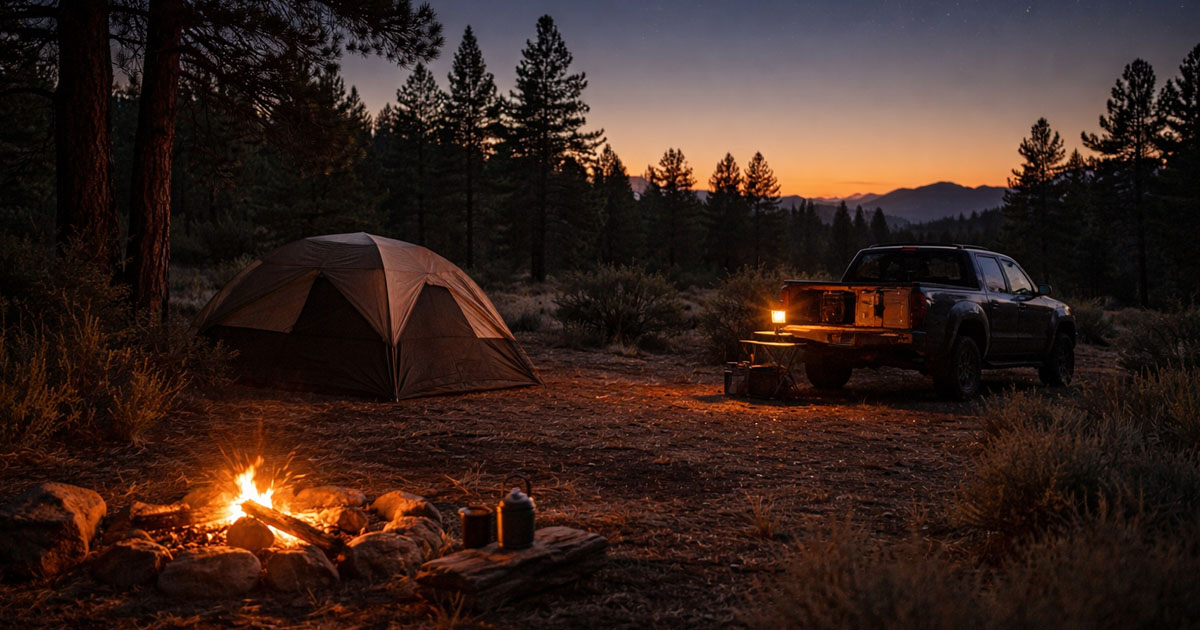
The first time I tried dispersed camping, I drove 40 miles down a forest road in the San Juan National Forest, found what looked like a good spot, and set up camp. No signs, no numbered pad, no camp host to wave at. Just me, a truck, and a clearing next to a creek. I woke up the next morning to a ranger explaining that I was parked 15 feet from the water — well inside the 200-foot buffer — and needed to move. That was the first of several lessons I’d learn the hard way about free camping on public land.
This guide is everything I wish someone had told me before that trip. Not the sanitized version you’ll find on government websites. Not the “just download iOverlander” advice that skips the hard parts. This is the full process — finding legal sites, understanding the actual rules, bringing the right gear, and camping in a way that keeps these places open for everyone.
If you’ve never camped outside of a developed campground, start here. If you’ve done it a few times and want to do it better, this covers that too.
What Is Dispersed Camping (and What It Isn’t)?
Dispersed camping is camping on public land outside of a designated, developed campground. There are no amenities — no water spigots, no toilets, no picnic tables, no camp hosts, no fees. You drive or walk to an undeveloped spot on Bureau of Land Management (BLM) or National Forest land, set up camp, and take care of yourself. In the U.S., it’s sometimes called wild camping, though that term is more common in Europe and Australia where the rules differ significantly.
That last part — taking care of yourself — is what separates dispersed camping from everything else. At a developed campground, someone maintains the road, pumps the water, empties the vault toilet, and collects the trash. At a dispersed site, you are all of those people.
Dispersed Camping vs. Boondocking
These are the same thing. “Dispersed camping” is the term used by the U.S. Forest Service and BLM. “Boondocking” is the term used by the RV, van life, and overlanding communities. If you hear someone say they’re boondocking in a national forest, they’re dispersed camping. We use both terms interchangeably throughout this site.
Dispersed Camping vs. Primitive Campgrounds
This is where people get confused. A primitive campground is still a designated campground — it just has minimal amenities. You might get a fire ring, a vault toilet, and a flat pad, but no water or electricity. There’s usually a small fee ($5–$10/night). Dispersed camping has none of that. No designated sites, no facilities, no fee. If there’s a brown sign with a campground name on it, you’re not dispersed camping.
Is Dispersed Camping Legal? The Rules You Actually Need to Know
Yes, dispersed camping is legal on most public land in the United States. But “most” is doing a lot of work in that sentence. The rules depend on who manages the land, which specific unit you’re in, and what time of year it is. Get this wrong and you’re looking at a citation, a fine, or — at minimum — an awkward conversation with a ranger at 7 AM.
Bureau of Land Management (BLM) Land
BLM manages 245 million acres across the western states, and most of it is open to dispersed camping. The baseline rules:
- 14-day stay limit within any 28-day period. After 14 days, you must move at least 25 miles.
- Camp on previously disturbed ground — existing clearings, pull-offs, and established sites. Don’t drive off-road to create a new spot.
- Stay at least 25 feet from any water source (some areas require more).
- Some BLM areas have designated camping corridors — check with the local BLM field office before assuming you can camp anywhere.
The biggest mistake people make with BLM land camping is assuming it’s all a free-for-all. It’s not. Some BLM areas near national parks or popular recreation zones have specific restrictions, fees, or permit requirements. The land around Moab, for example, has designated dispersed camping areas with specific rules that differ from general BLM guidelines.
National Forest (USFS) Land
The National Forest system — 193 million acres across 154 forests — is where most dispersed camping happens. Each forest has its own set of rules, but the common framework is:
- Dispersed camping is allowed unless posted otherwise.
- 14-day stay limit (same as BLM).
- You must be at least 100–200 feet from trailheads, developed campgrounds, and water sources (distance varies by forest — check the specific forest order).
- You can only drive and park on roads shown on the Motor Vehicle Use Map (MVUM). If a road isn’t on the MVUM, it’s closed to vehicles. Period.
- Some forests require you to camp within one vehicle length of the road or within 300 feet of a road — again, check the forest-specific rules.
The MVUM is the single most important document for national forest camping. More on that in the next section.
National Parks, State Land, and Where You Can’t Camp
Not all public land is open to dispersed camping:
- National Parks: No dispersed camping. Some parks have backcountry zones that allow camping with a permit (like the Hayduke Trail through Capitol Reef), but these are backcountry permits, not dispersed camping in the traditional sense.
- State trust land: Varies wildly by state. Arizona allows camping on state trust land with a $15/year recreation permit. Colorado does not allow camping on state trust land at all. Other states fall somewhere in between. Always check before you assume.
- Private land: Never camp on private land without explicit permission from the owner. Land ownership isn’t always obvious — what looks like open desert might be a private ranch. Verify with a public land layer on Gaia GPS or onX before setting up.
How to Find Dispersed Camping Sites
This is the part that every other guide glosses over. “Just check iOverlander” is not a strategy. Here’s the actual process we use before every trip. For the full step-by-step workflow — from identifying land type to evaluating a site on the ground — see our dedicated guide on how to find dispersed camping sites.
Start With the Motor Vehicle Use Map (MVUM)
The MVUM is a free map published by the U.S. Forest Service for every national forest. It shows every road that’s open to motor vehicles, and the dispersed camping corridors along those roads. If you’re camping in a national forest, this is your primary planning tool.
We’ve used MVUMs to plan trips in the Uncompahgre, Grand Mesa, White River, and Coconino National Forests. Every time, the MVUM showed us roads and camping corridors that weren’t on any app. It’s the most underused tool in dispersed camping.
Digital Tools That Actually Help
Apps supplement the MVUM — they don’t replace it. Here’s what we use and what each does well:
- iOverlander: The largest database of user-reported dispersed sites. Good for finding established spots with descriptions and recent reviews. The quality varies — some pins are out of date, gated, or on private land. Always verify.
- Campendium: Similar to iOverlander but skews toward RV-friendly sites. Good filtering options for cell signal strength and site size.
- FreeRoam: Clean interface, good public land overlay. Best for quickly identifying BLM vs. USFS vs. private land boundaries.
- Gaia GPS (with public land layer): Our most-used tool. The public land overlay shows exactly who manages each parcel — BLM, USFS, state, private. This is how you verify that the iOverlander pin is actually on public land and not someone’s ranch.
No single app has everything. We typically cross-reference iOverlander pins against Gaia GPS land ownership before driving anywhere.
What to Do When You Get There
You’ve done the research, driven the forest road, and arrived in the area. Now what?
Look for existing fire rings, cleared areas, and established pull-offs. These are previously used dispersed sites — and using them is better than creating new ones. New clearings damage vegetation and create erosion patterns that take years to recover.
If your planned spot is taken — and it will be, especially on weekends near popular areas — don’t panic. Have a backup. We always identify 2–3 alternative forest roads or areas before a trip. On a busy Fourth of July weekend in the White River National Forest, our first three spots were occupied. Our fourth — a lesser-known spur off FR-600 — was empty and turned out to be the best camp of the trip.
When evaluating a site, check five things:
- Flat ground — slight slope is fine, but you’ll regret a 10-degree tilt on night one
- Not in a wash or dry creek bed — flash floods are real and fast, even in clear weather
- 200+ feet from water — streams, lakes, rivers, springs
- Cell signal — check immediately so you know what you’re working with
- Shade assessment — morning shade keeps your tent livable; afternoon shade keeps your cooler cold
What to Bring — Dispersed Camping Gear That Actually Matters
This isn’t a 40-item checklist. If you already car camp, you have most of what you need. The gear that changes for dispersed camping is all about self-sufficiency — the stuff a developed campground provides that you now have to bring yourself. Think of it as off-grid camping: everything you rely on, you carry.
Water — The Non-Negotiable
There is no spigot at a dispersed site. Bring all your water or bring the ability to filter it. Our rule of thumb: 1 gallon per person per day, minimum. At elevation or in desert heat, bump that to 1.5 gallons. For a two-person, three-day trip, that’s 6–9 gallons — roughly 50–75 lbs of water.
Rigid containers beat collapsible bladders for vehicle-based camping. They stack better, don’t puncture, and you can pour from them without a second person holding the bag. We use 7-gallon Aqua-Tainers and refill them at every town stop.
If you’re staying longer than three days, consider a gravity water filter (like the Platypus GravityWorks) as a backup. A nearby creek isn’t a guaranteed water source — but if your main supply runs low, filtration means you’re not cutting the trip short. For the full water system — the math, containers, filtration, and grey water management — see our dispersed camping water guide.
Waste and Sanitation
There are no dumpsters. There are no vault toilets. You need a plan for both solid waste and trash.
Human waste: For stays of one night, cat holes work — dig 6–8 inches deep, at least 200 feet from water, trails, and camp. For anything longer, use WAG bags (Waste Alleviation and Gelling bags) or a portable toilet. WAG bags are lighter and cheaper. A portable toilet like the Reliance Luggable Loo is more comfortable for multi-day stays with a group. Either way, pack it out.
Trash: Everything you bring in leaves with you. Designate a heavy-duty trash bag in your vehicle from day one. This includes food scraps, banana peels, eggshells — things people assume are “biodegradable” but take months to break down and attract animals in the meantime.
Grey water: Scatter dish water and wash water at least 200 feet from any water source. Strain food particles out first and pack those out with your trash.
Power and Communication
No outlets, no camp host with a phone. You need to solve both.
Power: For weekend trips, a battery bank and your vehicle’s 12V outlet are enough for phones and headlamps. For trips of three days or more — especially if you’re running a fridge — a portable power station with a solar panel changes the math entirely. We’ve tested several across extended dispersed trips. For the full breakdown, see our guide to the best power stations for dispersed camping.
Communication: Cell signal at dispersed sites ranges from full bars to nonexistent, often within the same canyon. A satellite communicator — Garmin inReach Mini 2 or Zoleo — is not optional if you’re going remote. It sends SOS signals and text messages from anywhere on the planet. We carry one on every trip, and we’ve used it twice: once for a weather check when a storm rolled in, and once to update our expected return time when a road was washed out.
The Stuff You Forget
Every dispersed camper has a “should have brought that” story. Here’s our list of things that aren’t obvious:
- Leveling blocks or boards — dispersed sites are rarely flat. A couple of 2x8 boards under your tires make the difference between sleeping well and sliding into the tent wall all night.
- Extra water jugs — beyond drinking water. You need wash water, fire-extinguishing water, and a reserve.
- A headlamp with fresh batteries — there are no camp lights. When the sun goes down, it is dark.
- A paper map of the area — the MVUM, printed. Cell signal isn’t guaranteed, and GPS apps drain batteries.
- A basic tool kit and tire plug kit — forest roads have sharp rocks, branches, and washboard. A flat tire 20 miles from pavement is a problem you want to solve yourself.
- A shovel — for fire management, cat holes, and getting unstuck from soft ground.
Camp Setup and Etiquette — How Not to Be That Person
Dispersed camping only works because most people take care of the land. When they don’t, land managers close areas. It’s happened in Sedona, outside Moab, near Crested Butte, and in dozens of other places where overuse and bad behavior led to restrictions or outright closures. These dispersed camping tips aren’t just about being polite — they’re about keeping these places accessible.
Choosing and Setting Up Your Site
Use existing disturbed areas only. If there’s an established fire ring and a cleared area, that’s a dispersed site. If there isn’t, don’t create one. Don’t clear brush, don’t move rocks to flatten a spot, don’t cut branches for a better view. The whole point is to camp with minimal impact on land that nobody maintains.
Park on durable surfaces — rock, gravel, dry hard-packed dirt. Not on vegetation, not on wet meadows, not on cryptobiotic soil crust (the dark, lumpy soil common in Utah and the desert Southwest that takes decades to regrow).
Set up at least 200 feet from water sources. This protects water quality and gives wildlife access to drink without navigating your camp.
Fire Safety Beyond “Check Restrictions”
Even when fires are allowed, there are rules that most people ignore:
- Use an existing fire ring. Don’t build a new one. New fire rings scar the land and multiply every season.
- Keep fires small. You don’t need a bonfire — a cooking fire that fits inside a single ring is enough.
- Have 5 gallons of water or a shovel at the ring. Not at camp. At the ring. Within arm’s reach.
- Never leave a fire unattended. Not for ten minutes. Not to walk to the truck. Not ever.
- Dead and down wood only. Never cut standing trees, even dead ones. Standing dead trees are habitat for birds and insects.
- Stoves are not always exempt. Some Stage 2 fire restrictions ban all ignition sources including camp stoves. Read the actual restriction order — don’t assume stoves are always fine.
Neighbors, Noise, and the Unwritten Rules
Dispersed camping has no camp host to mediate conflicts. The unwritten rules exist because nobody’s there to enforce the written ones:
- Give space. If someone’s already camped, set up at least 300 feet away if terrain allows. Nobody drove 40 miles down a dirt road to hear your conversation.
- Generators before 8 PM. Some people run generators. That’s their right. Running one after 8 PM at a dispersed site — where people came specifically for quiet — will earn you dirty looks at minimum.
- Sound carries. Music, loud conversations, barking dogs — all of it travels farther without buildings and trees to absorb it. What seems like a normal volume at home can dominate a canyon.
- Dogs off-leash only if they’re under reliable voice control and there’s no one else within sight. An off-leash dog running into someone else’s camp is one of the fastest ways to start a conflict in the backcountry. For the full breakdown — rules by land type, gear, wildlife encounters, and waste management — see our guide on dispersed camping with dogs.
Breaking Camp — Leave It Better
The standard is “Leave No Trace,” but the real goal is to leave the site better than you found it.
- If you used an existing fire ring, make sure ashes are dead cold — stir them, douse them, stir again, feel them with the back of your hand.
- Walk the entire site on foot before you pull out. Look for micro-trash: twist ties, bottle caps, food wrappers, cigarette butts. Pick up anything you find, even if it’s not yours.
- If you created tire ruts in soft ground, do what you can to minimize the damage — brush loose dirt back into the tracks.
- Never leave food scraps, even buried. Animals dig them up, associate the site with food, and create a problem for the next camper.
Common Mistakes First-Time Dispersed Campers Make
After years of doing this and watching other people do it, these are the mistakes that come up over and over.
Not bringing enough water. People underestimate how much water they use when there’s no tap to refill from. Cooking, cleaning, drinking, fire safety — it adds up fast. Bring more than you think you need. Running out of water 30 miles from a gas station is a safety issue, not an inconvenience.
Arriving after dark with no backup site. Your GPS pin looked great on the app. But it’s 9 PM, the spot is taken, and you’re driving an unfamiliar forest road in the dark looking for anywhere flat enough to park. Always have 2–3 backup locations researched before the trip, and plan to arrive at least two hours before sunset.
Trusting a single GPS pin without checking land ownership. That iOverlander pin might be on private land, or the access road might be gated, or the site might have been closed since the last review. Cross-reference every pin against a public land layer. Five minutes on Gaia GPS saves you an hour of wasted driving.
Camping in a wash or dry creek bed. It looks flat. It looks sheltered. It also floods with zero warning during monsoon season. We’ve seen water come through a dry wash in the San Rafael Swell within 30 minutes of a storm that was visible but miles away. If the ground is sandy and channeled, you’re in a drainage. Move to higher ground.
Leaving grey water and food scraps on the ground. “It’s biodegradable” is not a plan. Food scraps attract rodents, bears, ravens, and coyotes to the site. Grey water creates grease spots and odors. Strain, scatter, and pack out.
The Bottom Line
Dispersed camping is the most rewarding way to camp — and the most demanding. There’s no safety net. No camp host. No dumpster. No spigot. Every convenience you’re used to at a developed campground is now your responsibility. That’s the trade-off for the solitude, the silence, and the freedom to camp exactly where you want on 400+ million acres of public land.
If you’ve never done it, here’s your first step: pick a national forest within two hours of home. Download the MVUM. Find a forest road with a dispersed camping corridor. Pack water, food, a shovel, and a way to handle your waste. Go for one night. Stay within cell range. See how it feels.
Once you’ve done that, you’ll either decide it’s not for you — and that’s fine — or you’ll start planning the next trip before you’ve packed up the first one.
For gear tested at actual dispersed sites, we cover that separately. Start with our guide to power stations for dispersed camping if you’re running a fridge or staying more than a weekend, or our best coolers for dispersed camping guide if you’re keeping it simple with ice.
Frequently Asked Questions
What is dispersed camping?
Dispersed camping is camping on public land outside of a designated, developed campground. There are no amenities — no water, no toilets, no picnic tables, no camp hosts. It’s allowed on most BLM and National Forest land unless posted otherwise. You bring everything you need and pack out everything you brought.
Is dispersed camping legal?
Yes, on most Bureau of Land Management and National Forest land. It’s generally not allowed in national parks (with few backcountry permit exceptions) or on private land without permission. Rules vary by area — always check the local ranger district or BLM field office before your trip.
Is dispersed camping free?
In most cases, yes. BLM and National Forest dispersed camping typically has no fee. Some areas require a free permit or have seasonal closures. A few popular corridors near national parks charge a small fee, but these are exceptions.
How do you find dispersed camping sites?
Start with the USFS Motor Vehicle Use Map (MVUM) for national forests — it shows which roads and corridors allow dispersed camping. Apps like iOverlander, Campendium, and FreeRoam show user-reported sites. Always verify land ownership with a public land layer on Gaia GPS or onX before driving in.
What is the difference between dispersed camping and boondocking?
They’re the same thing. “Dispersed camping” is the term used by the U.S. Forest Service and BLM. “Boondocking” is the term used by the RV, van life, and overlanding communities. Both mean camping on public land outside of a developed campground with no hookups or services.
What do you need for dispersed camping?
At minimum: all your own water (1 gallon per person per day), a way to handle human waste (WAG bags or cat hole supplies), fire-starting and extinguishing tools, a first aid kit, and enough food for your trip plus one extra day. A satellite communicator is strongly recommended for remote areas with no cell service.
Can you have a fire when dispersed camping?
It depends on current fire restrictions. When fires are allowed, use existing fire rings, keep fires small, and have water or a shovel ready to extinguish completely. Check the local ranger district or BLM field office website for active fire restriction orders before every trip — restrictions can change mid-season.
How long can you stay at a dispersed campsite?
The standard limit is 14 days within a 28-day period on both BLM and National Forest land. After 14 days, you must move at least 25 miles. Some areas have shorter limits — as low as 7 days near popular recreation zones. Check the specific regulations for the land you’re visiting.